Let’s cut to the chase—if you’re in the market for special aluminum profiles, one question that always pops up is: “Am I gonna run into a headache when it’s time to paint?” As someone who’s been supplying custom aluminum profiles for over a decade, I get it—no one wants to drop serious cash on a tailored part just to watch the paint chip, peel, or look like garbage a few months later. Let’s break this down, no jargon, no fluff, just the real tea. Special Aluminum Profiles
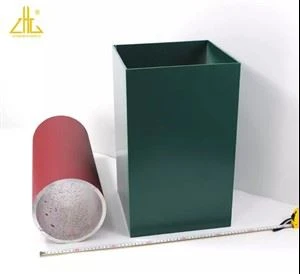
First, let’s talk about what makes “special aluminum profiles” different from the basic window frame aluminum you see at the hardware store. Basic aluminum is pretty much a one-size-fits-all mill finish—smooth, slightly dull, easy to paint if you prep it right. But special profiles? Those are the ones we make here at my shop—think extruded aluminum with weird, custom cross-sections (like notched rails for industrial machinery, rounded edge trim for luxury storefronts, heat-dissipating fins for LED lights, or custom brackets for medical devices). They might have deep grooves, sharp undercuts, uneven surface textures, or even leftover machining oils from the extrusion or fabrication process. That’s the stuff that messes up paint, not the aluminum itself.
Wait, but hold on—aluminum is actually a pretty paintable material, right? Most of the time, yeah—if you do it right. But special profiles have unique quirks that make prep the make-or-break step. I see so many clients come to me after they tried to paint their profiles themselves and it’s a disaster—paint peels off in sheets, runs in the deep grooves, has uneven coverage. The mistake? They skipped the custom prep that special profiles need. A flat piece of aluminum can get wiped down, sanded, primed, and coated in an hour. A weird-shaped profile with 10 narrow slots? That’s a whole different game. You can’t just wipe it with a rag—you need to get into every nook to get rid of the extrusion lubricant, and if you sand it, you have to do it evenly so the rough texture doesn’t catch the wrong amount of paint.
Let’s get into the science here, keep it simple. Aluminum forms a natural oxide layer on its surface, right? That thin, invisible layer is actually tough, but it’s super non-stick—like Teflon for metals. If you just spray paint straight onto that, it’s gonna flake off. Basic profiles get around this with a light sand blast or a wipe with a degreaser, but special profiles? Those deep crevices trap dirt, oils, and even leftover extrusion residue that the basic prep won’t touch. We always do a two-step degrease first for all our custom profiles—first a heavy-duty alkaline wash to get rid of the bulk manufacturing gunk, then a acid-based etch to rough up the surface just enough so the paint can grab on. For really textured or intricate profiles, we even do a light sand blast with fine glass beads—no sharp grit, just enough to create tiny little “teeth” for the paint to cling to. That’s the stuff most DIYers or even small fabrication shops skip, and that’s why their paint jobs fail.
But wait—what about powder coating? A lot of people ask me about that, since it’s more common for metal parts these days. Is powder coating easier than liquid paint for special profiles? Here’s the deal: powder is actually a lot more forgiving on weird shapes, because you spray it as a dry powder, then bake it so it melts and flows. Liquid paint can run or pool in deep grooves if you don’t apply it just right, but powder tends to coat evenly—even in undercuts, as long as you use the right gun setup. The catch? Powder only works if you can bake it, which means your profile can’t have any heat-sensitive parts (like plastic inserts or adhesive) attached to it. If your special profile has extra components, liquid paint might be the only option. But even then, prep is still king. I had a client last year who made custom aluminum brackets for a solar farm—they had super narrow notches on the sides, and their first round of liquid paint peeled off after a month because they just wiped it with isopropyl alcohol. We re-did the prep: full degrease, etch, light sand blast, then a two-part epoxy primer, and that’s been holding for two years now, no issues.
Another thing people don’t think about: the type of special profile alloy you’re using. Most aluminum profiles are 6061 or 6063 alloy, which are super common, easy to paint. But if you’re using a less common alloy, like 5052, or a heat-treated alloy for high-stress parts, the surface can be more or less porous, which changes how the paint adheres. We test every alloy we work with for adhesion before we send it out, so if you have a weird alloy for your custom profile, we’ll tell you what prep steps you need—no guesswork. I once had a small aerospace client who needed special aluminum profiles with integrated mounting holes; their alloy was a special high-strength 7075, which is way less porous than 6061. We had to adjust our etch time to be 30% longer, and use a specific adhesion promoter that works on that alloy. If we’d skipped that, their paint would have fallen off during their first stress test, which would have been a disaster for their project.
Wait, let’s talk about common myths too. I hear all the time: “Aluminum is too soft to hold paint” or “Special profiles are too weird to paint well.” That’s just not true. The problem is not the aluminum or the shape—it’s not matching the prep and coating to the profile’s unique traits. Let’s use an example: a custom aluminum profile for a modern retail storefront, with curved edges and a mill finish. If you prep it right, it can be painted to look just as good as a flat piece, and it’ll hold up to weather, foot traffic, and cleaning for 10+ years. But if you just grab a can of spray paint from Home Depot and blast it on, it’s gonna chip on the curved edges in 6 months. The edge is the weakest point for paint, right? But with proper priming and a flexible topcoat, that edge is just as strong as the flat part. We do that all the time for storefront clients—they love the custom shape, and the paint job holds up way better than wood, which rots or scratches way faster.
Another example: custom aluminum profiles for industrial machinery, which might be exposed to oil, chemicals, and temperature swings. Those need a different kind of paint than a decorative profile. We use a polyurethane topcoat for industrial parts, which is resistant to chemicals and temperature changes, and it adheres great if we do the right prep. Last year we made custom extruded aluminum rails for a food processing plant—they get splashed with cleaning chemicals every day. The client was worried the paint would fade or peel, but after our prep process, the paint has held for over 18 months, no issues. They actually just ordered 50 more sets because their first batch worked so well.
Let’s also get into cost for a second, because I know that’s a big factor. If you have a basic profile, prep and painting might cost you $0.50 per linear foot. But a special profile with intricate shapes? You’re looking at $2 to $5 per linear foot, depending on how complex it is. But that’s not a scam—that’s because it takes time to prep all those grooves, use specialized equipment, and make sure every part is coated. If you try to cut corners on that cost, you’ll end up repainting in a year, which costs way more in the long run. I tell all my clients: it’s better to spend a little extra upfront on proper prep and coating than to deal with a paint job that fails.
So, circling back to the original question: Are special aluminum profiles easy to paint? The short answer is: if you do it right, hell yeah, they’re way easier than you think. The hard part isn’t the painting itself—it’s the custom prep that fits the profile’s unique shape, alloy, and intended use. A lot of people see the weird cross-section and get nervous, but with the right steps, you can get a paint job that’s durable, looks great, and lasts for years.
Wait, but what if you’re not sure how to do it? That’s where we come in. I’ve been in this game long enough that I can tell you exactly what prep steps your custom profile needs, what type of paint will work best, and even help you design the profile to be more paintable if you’re still in the planning phase. For example, if you’re designing a profile with super narrow grooves, we can suggest a shape that’s a little wider, so paint can get in there easier, or use a powder coat that’s more forgiving on tight spaces. We also offer custom painting and coating services for all the special profiles we supply, so you don’t have to handle the painting yourself. No stress, no mistakes, just a perfect end product.

If you’re in the market for special aluminum profiles and you’re worried about the paint job, or if you already have a project in the works and need someone to walk you through the process, hit us up. We can send you a free quote, answer all your questions about prep, coating, alloys, whatever you need. No sales pitch, no pressure—just real advice from someone who’s been doing this for years and has seen every paint disaster and every perfect paint job you can imagine.
Fluorocarbon Coating Profile References:
ASM International. (2016). Aluminum Surface Treatment for Adhesion and Coating. ASM Handbook Volume 5: Surface Engineering.
National Association of Manufacturers. (2022). Finishing Guidelines for Custom Extruded Aluminum. Manufacturing Insights Report.
The Aluminum Association. (2021). Adhesion and Durability of Coatings on Aluminum Alloys. Technical Paper No. 21-004.
Foshan Pailian Aluminium Ltd
Foshan Pailian Aluminium Ltd is one of the most professional special aluminum profiles manufacturers and suppliers in China. With the aid of experienced staff and advanced equipment, we can assure you the high quality, high precision and excellent design of our products. Come and wholesale the cheap special aluminum profiles made in China here from our factory. Customized orders are welcome.
Address: 1802A, 1802B, 1802C, 1802D, 1802E,18th Floor, Aluminum Association Building, NO.70 Lingnan Road,DALI FOSHAN CITY,GUANGDONG ,CHINA
E-mail: zhlaluminum@gmail.com
WebSite: https://www.pailian-aluminium.com/
